


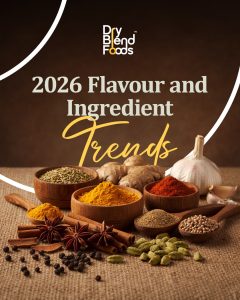
2026 is shaping up to be a year where flavour, function and experience converge, with protein density, gut friendly fibres, global cuisines, complex heat and texture all moving from niche to mainstream in product development. For a solutions partner like Dry Blend Foods, these shifts translate directly into opportunities to build smarter seasoning systems, beverage premixes and bases that are both on trend and operationally sound for kitchens.
Health first, flavour forward
Consumers are looking for foods that support satiety, weight management and metabolic health, which is pushing high protein, GLP 1 friendly formulations and fibre rich systems into the spotlight. This is expanding the brief for blends that can carry added protein or functional fibres without compromising taste, colour or process stability in QSR, cloud kitchen and industrial formats.
At the same time, there is rising pressure to keep labels clean, with short, recognisable ingredient lists and transparent positioning now viewed as a basic expectation rather than a premium claim. Seasonings, coatings and beverage premixes that deliver functionality using natural bases, botanicals and minimally processed carriers will be better placed to support “permissible indulgence” and everyday wellness launches.
Global flavours get specific
In 2026, “global” is becoming much more precise, as consumers look for named cuisines and regionally rooted flavour stories rather than broad tags like Asian or Latin. Ingredients such as galangal, lemongrass, turmeric, pandan and tamarind are breaking out through retail sauces, pastes and seasonings that make dishes like laksa, rendang or regional curries easier to execute at home or in busy commercial kitchens.
This interest extends to spice blends like za’atar, sumac, berbere and baharat, as well as emerging signatures from Malaysia, Korea, Brazil and Colombia that layer heat, acidity and aromatics. For B2B operators, custom dry blends that capture these profiles in a consistent, shelf stable format can reduce dependence on specialised mise en place while keeping flavour stories authentic across outlets.
Heat with character, not just burn
Spicy is no longer about linear burn; consumers, especially younger cohorts, are seeking complex heat that pairs chilli with sweetness, tang or smoke. This is driving growth in profiles where peppers like habanero, Thai chilli or Aji Amarillo are combined with fruits such as mango, pineapple or dragon fruit to create layered sweet heat experiences.
Large brands are exploring playful territories such as “swicy”, “swangy” and “swavory”, where spicy, sweet, tangy and savoury notes intersect in snacks, table sauces, noodles and ready meals. Dry seasoning systems that can deliver this kind of multi-dimensional heat in everything from coatings and snack dustings to instant noodle masalas are well positioned to scale these trends without adding complexity at the stove.
Texture as a design tool
Texture is now a driver of differentiation in its own right, with chewy and creamy formats gaining clear momentum across categories. Chewy elements inspired by mochi, tapioca pearls and gummies are moving beyond desserts into beverages, snacks and hybrids that offer “stretchy” or “bouncy” mouthfeel, particularly appealing to Gen Z.
In parallel, creamy textures are being reimagined through whipped dressings, compound butters and smooth yet clean label dairy or dairy style bases. For ingredient suppliers, this means engineering blends that manage viscosity, emulsification and stability while keeping labels tight, enabling operators to dial in signature textures in sauces, fillings, beverages and toppings with less trial and error on the line.
What this means for food brands
For brands, the winning launches in 2026 will be those that combine on trend flavour territories with clear functional benefits and operational simplicity. Custom dry blends, seasoning systems and premixes can act as the bridge, translating complex flavour and texture briefs into forms that are easy to scale, store and execute consistently across central kitchens, commissaries and manufacturing plants.
As health, experience and authenticity continue to converge, partners that can integrate fibre, protein, clean label cues, specific global profiles and textural engineering into ready to use systems will be crucial for staying ahead of the curve. This is where a solution driven approach to dry blending helps brands move faster from concept to commercial reality while keeping every batch aligned with both trend and brand promise.
For more insights on related topics, explore our article on: Why Smart Kitchens Are Switching to Pre-Made Blends This Winter
